The right fit can make or break your look. A well-fitted pair of dress pants pulls your entire look together, keeps you comfortable from boardroom to dinner, and gives you the kind of quiet confidence that only comes when everything sits exactly where it should.
Get the fit wrong, though, and even the finest fabrics won't do you any favors. So how should dress pants fit? This guide walks you through every detail, from the waist to the hem, so your dress trousers feel as sharp as they look.
Table of Contents
Why the Fit of Dress Pants is Important
You could nail the top half of your outfit. Tuck in a crisp shirt, put on a quality belt, and pair it with a well-chosen jacket, but the pants don't fit correctly? The whole thing unravels.
These scenarios are all too common:
-
Too much material bunching at the ankles reads as careless
-
A tight waist digs in and creates an unflattering silhouette nobody wants
-
Pants that feel tight through the thighs restrict your movement and wear out faster than they should
According to a 2023 Coresight Research study, pants are the most commonly returned clothing item, with 65% of apparel retailers citing them as the most frequently returned garment.
The leading cause? Incorrect sizing and fit.
That tells you something: most men are walking around in the wrong size.
Understanding what a proper fit actually looks like puts you well ahead.
Key Areas Where Dress Pants Should Fit Properly
There is no single measurement that makes or breaks dress pants. It's how several areas work together to create a clean, sharp, and comfortable silhouette.
Here's what to watch for.
1. Waist
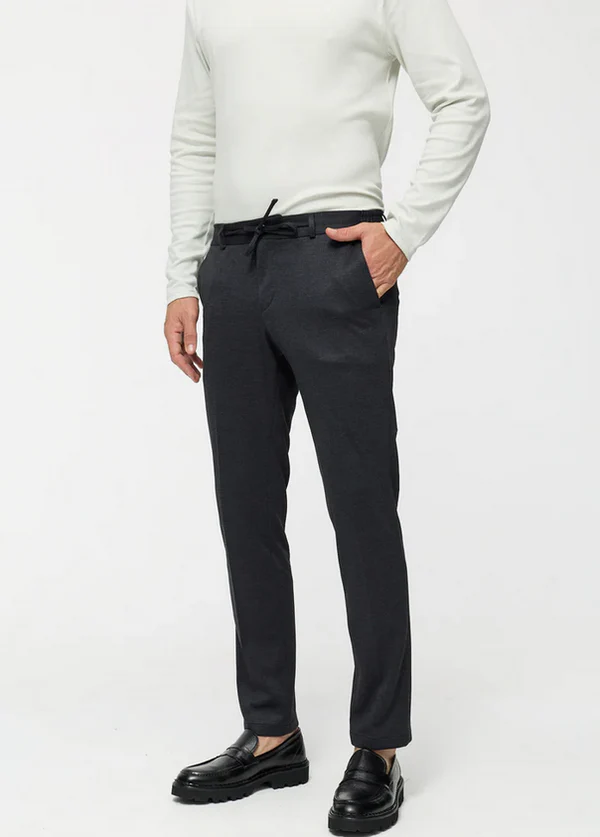
The waist of dress pants should be snug enough to sit at the appropriate height without needing a belt.
The ideal gap between your waist and the waistband should be approximately one finger's width. Dress pants should sit at the natural waist, typically just above the navel.
If the pants are too tight, they can cause discomfort and create an unflattering muffin top effect. Too loose, and the pants fall below where they should, throwing off proportions around the waist entirely.
2. Rise (Front and Back)
The rise of dress pants determines where the waistband sits on your body, ideally just below your belly button.
It's the distance from the crotch seam to the waistband, and it's more important than men think.
As Ryan Devens, founder of Tailors' Keep in San Francisco, puts it in an interview with Put This On: "Much like how a suit jacket should fit well through the shoulders, a pair of trousers starts with the rise."
A rise that's too short creates discomfort in the crotch area. Too long, and the fabric sags awkwardly. Mid-rise works well for most builds, while high-rise options suit those who prefer pants sitting above the hip bone.
3. Seat and Thighs
The seat of your dress pants should fall smoothly against your body, neither too roomy nor too tight.
A quick test: you should be able to pinch about half an inch to a full inch of fabric on either side of your thighs.
Pockets tell you a lot, too. They should lie flat. If they pull open, the pants are too tight in the hips. The fabric droops beneath the seat? There's too much material.
4. Leg Width and Taper
Modern dress pants often feature a slight taper from the knee to the ankle. That said, leg width is largely a matter of personal preference and body type.
-
Slim fit: offers a closer fit through the hip and thigh, with tapered styles narrowing toward the ankle
-
Classic fit: provides the most room, with a straight-leg profile maintaining consistent width throughout
-
Modern tapered fit: balances both, pairing a comfortable seat with a narrower leg opening for a classic look
Choosing a classic style helps with longevity and keeps your men's dress pants from feeling dated within a season or two.
5. Pant Length
This is where many men trip up. The break of your dress pants refers to how the pant leg falls and folds at the top of your shoes.
-
No break: The bottom hem just grazes the top of the shoe. Modern and sharp
-
Quarter break: A very subtle crease in the fabric. Clean and barely noticeable
-
Half break: A slight break at the front, nothing at the back. The most versatile option by far
-
Full break: A noticeable fold over the shoe. Traditional, but it can look baggy if not done correctly
Shorter men should opt for no break or a slight break to appear taller.
Taller men can carry a half break or full break without the extra fabric overwhelming the frame.
Different Types of Dress Pant Fits
Knowing how dress pants should fit starts with understanding what's available. Flat-front pants are generally more modern and flattering. Pleated pants offer more room and are considered a classic choice.
In 2026, achieving the right fit means balancing classic tailoring standards with modern preferences for mobility.
Pair yours with men's dress coats for a formal occasion, or layer with dress vests when you want to add a touch of personal style.
Step-by-Step Guide to Finding Your Perfect Dress Pants
Finding dress trousers that fit perfectly doesn't need to be complicated. Follow this process, and you'll save yourself time, money, and a lot of frustration.
-
Know your measurements: Use a measuring tape for your waist, hips, inseam (the distance from crotch to hem), and thigh circumference
-
Wear the right accessories: Try pants on with your dress shoes and a shirt, so you can see how the fabric falls against the top of your shoes
-
Check the waistband: The three-finger rule: you should be able to fit three fingers comfortably between your waist and the waistband
-
Do the squat test: Squat for about 10 seconds. If the fabric pulls or you feel tight through the seat, something's off
-
Assess the break: Stand naturally in your shoes and decide which break style suits your body type and personal preference
Common Dress Pant Fit Mistakes to Avoid
Even style-conscious men make these errors. Knowing what to watch for keeps you from settling for a poor fit.
-
Ignoring the rise: A wrong rise throws off how the entire pant sits on your body
-
Wearing pants too long: Excessive pooling at the ankles looks careless. When in doubt, go shorter
-
Choosing by size alone: A size 34 from one brand may fit like a 36 from another. Always check specific measurements
-
Skipping tailoring: It's easier for a tailor to shorten pants than to lengthen them. A few quick alterations can turn an okay pair into something that truly complements your body type
-
Chasing trends over fit: Leg-width trends range from super-skinny to oversized, but a well-fitted pair should always have clean lines and as few wrinkles as possible
How to Check Dress Pant Fit at Home
Stand in front of a full-length mirror with your shoes on. The fabric should not create excessive horizontal wrinkles when you're seated or standing.
If it pulls across the thighs when sitting, it's too tight. Bunching at the waist means they're too big.
Check them.
It should sit comfortably at the top of your shoes without dragging or exposing too much ankle. Walk around, sit down, and cross your legs. Well-fitted dress pants should allow comfortable movement in every position.
If something is close but not quite right, a professional tailor can adjust the waist, length, and taper. Tailoring enhances the appearance of your outfit and can elevate it as a whole. Using a tailor ensures your measurements are accurate and your men's dress pants fit perfectly.
Conclusion
Understanding your body and paying attention to the details that matter, such as waist, rise, seat, leg width, and length, is important for great-fitting dress pants. Every personal choice, from break style to taper, should first serve your body type and personal style.
Don't settle for close enough.
A perfect fit is the difference between looking put together and looking genuinely polished. Explore curated collections built for quality and fit, and let a skilled tailor handle the rest.
Frequently Asked Questions (FAQ)
How should dress pants fit at the waist?
Dress pants should sit at your natural waist, just above the navel. The waistband should hold the pants in place without a belt, with about a finger's worth of space so it doesn't dig in or cause discomfort throughout the day.
How long should dress pants be?
It depends on personal preference and shoe style. A half break, with a slight crease at the front but no pooling at the ankle, is the most versatile choice. Avoid too much material bunching at the bottom.
Should dress pants be tight or loose?
Neither. Dress pants should not be too loose and baggy, nor should they be skin-tight. You want a fit that sits comfortably with enough extra room to move, sit, and walk without restriction.
What is the correct fit for dress pants in the thigh area?
You should be able to pinch about half an inch to a full inch of fabric on either side. The fabric should drape smoothly without clinging or creating horizontal creases. If your pockets pull open when standing, the hip and thigh area needs more room.